
High-performing teams are not made up of perfect people. They are made up of people who operate differently. Because team performance is not just about talent. It is about how people work together every single day.
Many leaders focus on outcomes:
- engagement
- productivity
- culture
- performance
But those outcomes do not happen by accident.
They are the result of daily behaviors, systems, and interactions.
If you want a stronger team, you have to focus on what actually drives performance.
At Vivo Team, we consistently see six indicators show up in highly functioning teams.
The Six Key Indicators of Highly Functioning Teams
1. Communication
High-performing teams communicate with clarity.
People do not leave meetings interpreting things differently.
Expectations are understood.
Priorities are clear.
But communication is not just about talking.
Strong teams also know how to:
- listen actively
- clarify expectations
- confirm understanding
- align before moving forward
When communication is weak, teams waste time correcting misunderstandings and redoing work.
2. Accountability
Strong teams do not rely on constant reminders and follow-up to get things done.
People take ownership.
Commitments are clear.
Accountability becomes part of the culture rather than the manager’s responsibility alone.
In highly functioning teams:
- expectations are explicit
- ownership is shared
- follow-through is consistent
- people address issues early
Without accountability, even strong ideas fail to gain momentum.
3. Interactive Feedback
High-performing teams do not wait for annual reviews to improve.
Feedback happens consistently and in real time.
People reflect, adjust, and improve continuously.
Strong feedback cultures include:
- behavioral feedback
- feedforward
- ongoing follow-up
- open dialogue
This helps teams avoid repeating the same mistakes and creates faster learning.
4. Structures
Strong teams create consistency in how they operate.
Meetings have purpose.
Decision-making is clear.
Processes reduce confusion instead of creating it.
Structure is often misunderstood as bureaucracy.
But effective structures create clarity, alignment, and momentum.
When teams lack structure:
- meetings drift
- priorities become unclear
- decision-making slows
- work becomes inconsistent
Strong structures help teams move faster, not slower.
5. Emotional Intelligence
High-performing teams know how to navigate pressure and tension productively.
People pause instead of reacting.
They stay open to feedback.
They manage conflict constructively.
And they understand how their behavior affects others.
Emotional intelligence allows teams to:
- work through disagreement
- reduce defensiveness
- maintain trust
- communicate effectively under pressure
Without emotional intelligence, even talented teams become reactive and disconnected.
6. Cohesion
Strong teams move in the same direction.
People trust each other.
Speak honestly.
Work through tension.
And take shared ownership for results.
Cohesion is not about everyone agreeing.
It is about staying connected through challenges.
Highly functioning teams evolve over time.
They move through tension rather than avoiding it.
That is how trust is built.
When cohesion is weak:
- side conversations increase
- alignment breaks down
- silos form
- people disengage
When cohesion is strong, teams collaborate more naturally and stay aligned even under pressure.
High-Performing Teams Are Built Intentionally
Strong teams do not happen by accident.
They are built intentionally through:
- consistent behaviors
- clear expectations
- strong leadership
- healthy systems
- ongoing development
The strongest organizations recognize that performance is not driven by talent alone.
It is driven by how people work together every day.
When these six indicators are strong:
- communication improves
- meetings become more productive
- accountability increases
- conflict becomes easier to navigate
- collaboration strengthens
- teams move faster
People spend less time managing dysfunction and more time doing meaningful work.
High-performing teams are not perfect.
They are intentional.
Download: The 6 Key Indicators of Highly Functioning Teams
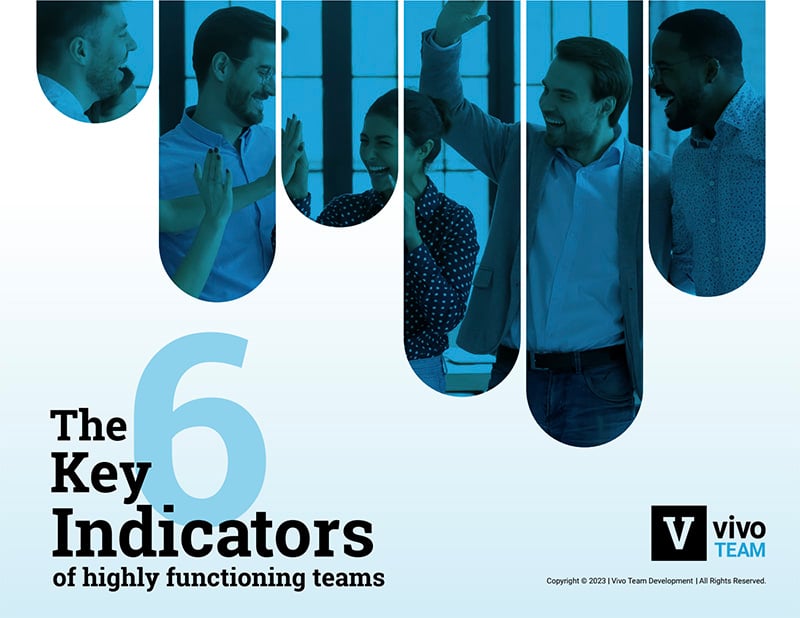
If you want to identify where your team is losing productivity and how to fix it, download the full guide:
Full Video Transcript
High performing teams are not made up of perfect people.
They're made up of people who operate differently.
Because team performance is not about talent, it's about how people come together and work together every single day.
I'm Renée Safrata.
At Vivo Team, we work with teams and leaders to uncover what's getting in their way of performance.
And across every team we've worked with, the same six key indicators consistently show up.
Most leaders focus on outcomes, engagement, productivity, culture, and performance.
But those things don't happen by accident.
They are a result of daily behaviors, systems, and interactions.
So if you want a stronger team, you have to focus on what actually drives performance.
One: Communication.
High performing teams communicate with clarity.
They don't leave meetings interpreting different things.
Expectations are understood, priorities are clear, and communication goes beyond talking.
It includes listening, clarification, and alignment.
Two: Accountability.
Strong teams don't rely on reminders and follow-ups to get things done.
People take ownership, commitments are clear, and accountability becomes part of the culture, not just the manager's job.
Three: Interactive Feedback.
High performing teams don't wait for annual reviews to improve.
Feedback happens consistently.
People reflect, adjust, and improve in real time.
That's how teams avoid repeating the same mistakes.
Four: Structures.
Strong teams create consistency in how they operate.
Meetings have purpose.
Decision making is clear.
Processes reduce confusion instead of creating it.
Because structure creates clarity, and clarity creates momentum.
Five: Emotional Intelligence.
High performing teams know how to navigate pressure and tension.
People pause instead of reacting.
They stay open to feedback.
They manage conflict proactively.
And they understand how their behavior affects the people around them.
Six: Cohesion.
Strong teams move in the same direction.
People trust one another.
They speak honestly.
They work through tension.
And they take shared ownership to get results.
Because cohesion isn't about everyone agreeing.
It's about everyone staying connected through challenges.
When these six indicators are present, teams move faster.
Collaboration and communication improve.
Meetings become more productive.
Conflict becomes easier to navigate.
And people spend less time managing dysfunction and more time doing real work.
High performing teams don't happen by accident.
They are built intentionally through consistent behaviors, clear structures, and strong leadership.
If you want to explore these indicators, download Vivo Team's guide, The 6 Key Indicators of Highly Functioning Teams, at the link below.
Because when you invest in your people, the results will follow.