
Your team is exhausted. Leadership won’t approve new hires. And you’re stuck in the middle.
If you’re an HR or operations leader, this is a familiar pattern. Managers say they’re overwhelmed. Deadlines are slipping. Engagement is dropping.
The default solution is always the same: we need more people.
But in most cases, that’s not the problem. Adding people to a dysfunctional team doesn’t fix performance. It just creates a bigger, more expensive version of the same issue.
The real problem is something most organizations don’t measure. It’s friction.
The Real Problem: It’s Not Workload. It’s Friction.
Most leaders assume their teams are overworked. They’re not. They’re slowed down by friction, the hidden inefficiencies that drain time, energy, and output every day.
Friction shows up as:
- Unclear communication
- Redundant or ineffective meetings
- Lack of ownership and follow-through
- Time spent clarifying instead of executing
This is what makes teams feel busy without being productive. And when you hire into that environment, the friction doesn’t go away. It spreads.
The 6 Key Indicators of High-Performing Teams
At Vivo Team, we measure team performance using 6 key behavioral indicators. These indicators reveal where productivity is being lost and how to recover it.
Here are two of the most common breakdowns:
Communication
Communication is either a multiplier or a bottleneck.
When it’s clear:
- Work moves faster
- Decisions are easier
- Teams stay aligned
When it’s unclear:
- Time is lost in clarification
- Mistakes increase
- Productivity slows
If your team spends just 30 minutes a day decoding unclear communication, that’s 20+ hours lost every week.
That’s not a soft issue. That’s a measurable cost.
Accountability
Accountability drives execution.
When it’s strong:
- People take ownership
- Work moves forward without constant oversight
- Leaders stay out of the weeds
When it’s weak:
- High performers carry the load
- Leaders become bottlenecks
- Output drops while effort appears high
Over time, your top talent burns out—and leaves. Replacing a strong employee can cost 1.5x their salary.
That’s not a people issue. That’s a financial leak.
Leadership Development Is Loss Prevention
Most organizations treat leadership development as a “nice to have.”
It’s not. It’s loss prevention.
When you improve communication and accountability, you’re not just improving culture, you’re recovering productivity that’s already built into your payroll.
You’re unlocking capacity that already exists inside your team. You don’t need more people. You need more from your people.
Stop the leaking. Start the leading.
Download: The 6 Key Indicators of Highly Functioning Teams
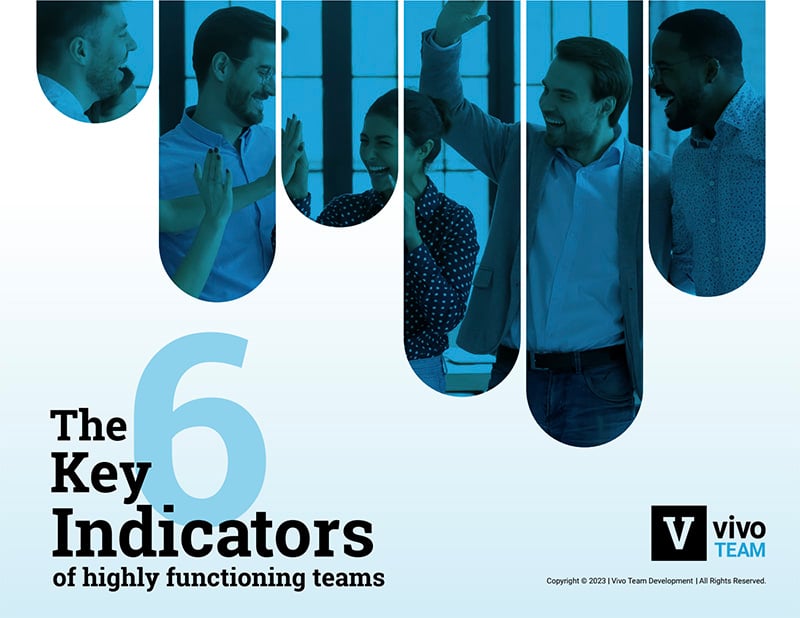
If you want to identify where your team is losing productivity and how to fix it, download the full guide:
Full Video Transcript
Your team is exhausted and leadership says no to new hires.
Here's the problem.
Adding people to an already dysfunctional team just gives you a bigger, more expensive dysfunctional team.
I'm Renee Safrata, and I work with leaders to uncover what I call hidden capacity.
Here's how it works.
Most leaders think that they have a workload problem.
They don't.
They have a friction problem, and that friction is quietly eroding productivity every single day.
Let's talk about Alex.
Alex runs an 8-person operations team, and he's convinced that he needs to hire 2 more people to hit his targets.
His team feels overworked, and he thinks the solution is headcount.
But when we look at the data, the workload isn't the issue, the friction is.
And this is where most companies get it wrong.
When we audit teams like Alex's, we don't start with tasks, we start with behaviors.
At Vivo Team, we measure against 6 key indicators of high performance.
Let's just talk about 2 indicators.
First, communication.
If a team wastes just 30 minutes a day decoding unclear emails, sitting in unfocused meetings, or chasing missing information, they are losing over 20 hours of productivity every week.
That's costly.
This is like hiring a part-time employee.
They've already paid for them, but they've actually never showed up for work.
Second indicator, accountability.
When your high performers are quietly carrying those people who are coasting, two things happen.
Your top talent burns out, and eventually they'll leave.
Replacing a strong employee costs up to 1.5 times their salary.
This is not a people issue, this is a financial leak.
When you fix these indicators, you're not just improving culture, you're performing loss prevention.
You are recovering productivity that's already paid for by finding capacity inside the team that you already have.
If you want to find out about the other 4 places where productivity is leaking, download Vivo Team's guide, the 6 key indicators of highly functioning teams, in the link below.
Let's stop the leaking and start the leading, because when you invest in people, the results will follow.