
Most leaders know feedback matters. Yet many have had the same frustrating experience. They address an issue. The employee agrees. And a few weeks later, nothing has changed.
The problem is not that feedback was given. The problem is that feedback alone is rarely enough to drive lasting behavior change.
Many leaders treat feedback as a one-time event. They point out what happened, explain why it matters, and assume improvement will follow.
Sometimes it does. Often it doesn’t.
That’s because meaningful change requires more than feedback.
It requires three elements working together:
- Feedback
- Feedforward
- Follow-up
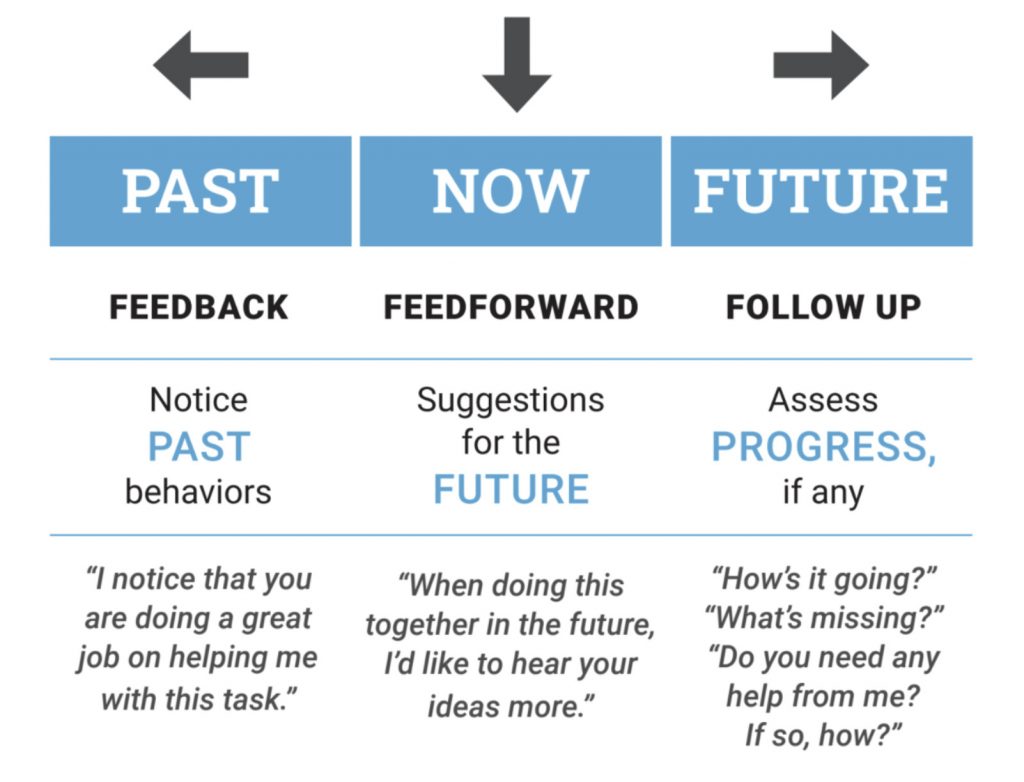
Together, these three "F" words create interactive feedback, a practical system for helping people improve.
Why Feedback Alone Falls Short
Feedback focuses on what has already happened.
It helps people understand:
- what they did
- what impact it had
- why it matters
But feedback by itself does not tell people exactly what to do next. Without a clear path forward and ongoing reinforcement, old habits tend to return.
Interactive Feedback Drives Improvement
Copyright © 2026 Vivo Team Development All Rights Reserved.
1. Feedback
Feedback describes observable behavior. The most effective feedback is:
- specific
- timely
- behavioral
- objective
A simple way to start is with: “I noticed…”
For example:
“I noticed you missed the last two deadlines.”
"I notice that you are doing a great job on helping with that task."
This keeps the conversation focused on facts rather than assumptions or judgments.
2. Feedforward
Feedforward shifts the conversation from what happened to what should happen next.
It answers the question: “What specific behavior will lead to better results in the future?”
For example:
“Going forward, I’d like you to flag any risk to a deadline at least 48 hours in advance.”
Feedforward creates clarity and gives people a concrete action to take.
3. Follow-Up
Follow-up is what makes accountability stick. It reinforces the importance of the conversation and provides an opportunity to review progress.
For example:
“How is that going? What's missing”
"Do you need any help from me. If so, how?"
Without follow-up, feedback is often forgotten.
With follow-up, behavior change becomes much more likely.
Why Follow-Up Matters Most
This is where many leaders fall short.
They provide useful feedback and clear direction, but never revisit the conversation.
The message unintentionally becomes: “This wasn’t that important.”
Follow-up communicates that improvement matters.
It also gives leaders a chance to:
- recognize progress
- address obstacles
- adjust expectations
- reinforce accountability
The Cost of Ineffective Feedback
When feedback does not lead to change:
- the same mistakes are repeated
- performance plateaus
- frustration increases
- accountability weakens
- leaders repeat themselves
Over time, this erodes trust and slows team performance.
How to Make Feedback More Effective
To increase the likelihood of lasting change:
- Describe the behavior objectively.
- Clarify what needs to happen next.
- Follow up consistently.
In other words:
Feedback explains the past.
Feedforward defines the future.
Follow-up ensures it sticks.
If your feedback is not leading to change, the issue may not be the conversation itself.
It may be what happens after the conversation.
Because feedback alone raises awareness.
Feedback, feedforward, and follow-up create improvement.
Download: The 6 Key Indicators of Highly Functioning Teams

If you want to identify where your team is losing productivity and how to fix it, download the full guide:
Full Video Transcript